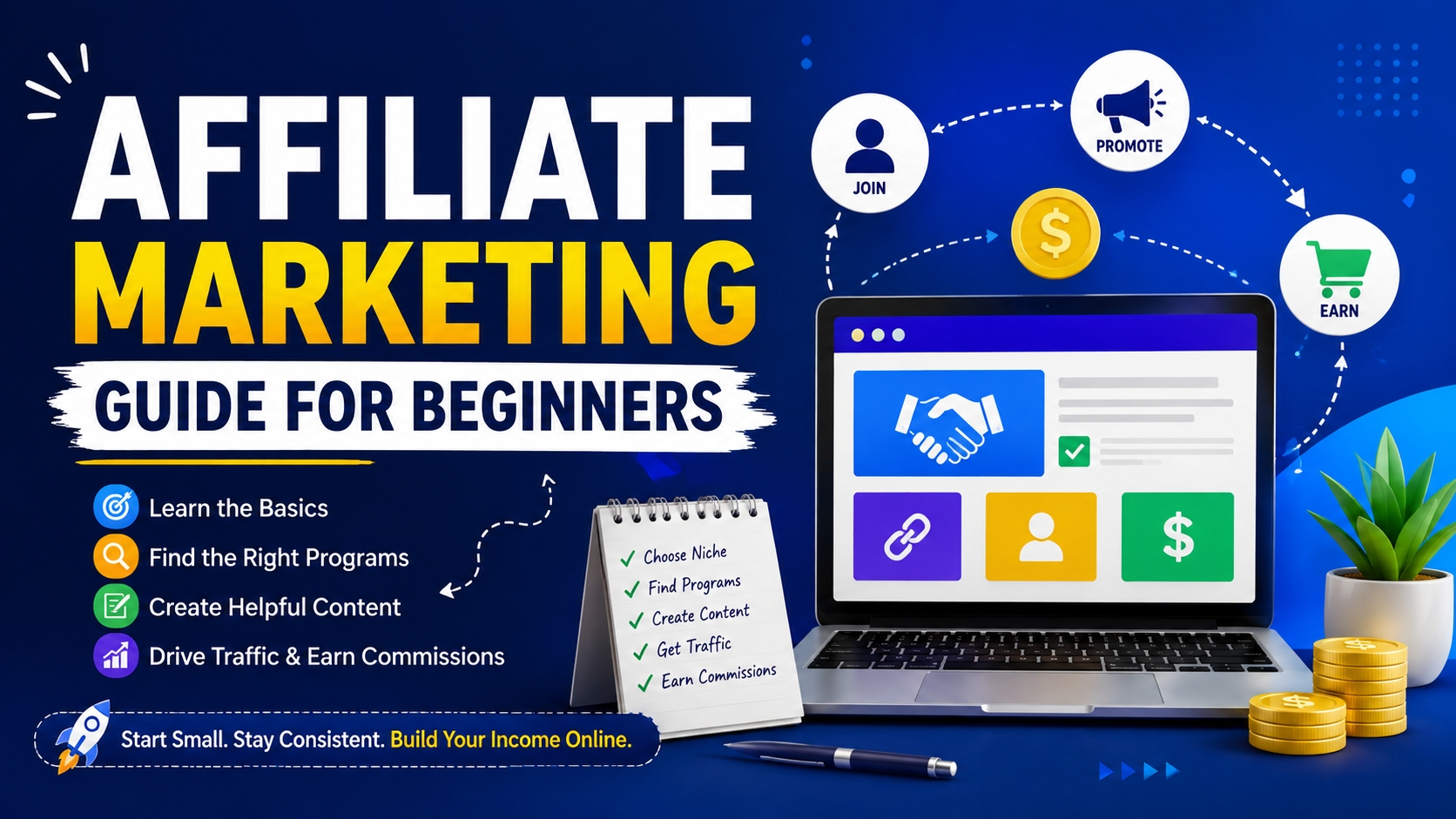
Affiliate marketing is one of the simplest ways to start building an online income stream without creating your own products. You recommend useful products or services to an audience, and when someone makes a qualifying purchase through your unique affiliate link, you can earn a commission.The good news is that you do not need a large website, thousands of followers, or advanced technical skills to get started. What matters most is choosing the right niche, understanding your audience, creating genuinely helpful content, and promoting products that you can confidently recommend.
What Is Affiliate Marketing?
Affiliate marketing is a performance-based marketing model that connects three main parties: the merchant, the affiliate, and the customer. The merchant provides the product or service, the affiliate promotes it, and the customer makes the purchase.
Affiliates receive a special tracking link. If a visitor clicks that link and completes an eligible action, such as purchasing a product or signing up for a service, the affiliate may receive a commission.
A Simple Example
Imagine you run a blog about blogging tools. You publish an article explaining how to choose web hosting and recommend a hosting service using your affiliate link. A reader clicks your link, purchases a hosting plan, and the merchant records the referral. You then receive the commission according to the program’s terms.
How Affiliate Marketing Works
- Choose a niche: Select a topic you understand or are willing to learn deeply.
- Join an affiliate program: Find relevant companies, networks, or marketplaces offering affiliate partnerships.
- Get your affiliate link: The program provides a unique URL that tracks referrals.
- Create useful content: Publish tutorials, reviews, comparisons, guides, or other content that helps people make decisions.
- Promote your content: Use SEO, social media, email newsletters, YouTube, or other appropriate channels.
- Earn commissions: When visitors complete qualifying actions through your links, you earn according to the program’s commission structure.
How to Start Affiliate Marketing as a Beginner
1. Pick the Right Niche
Your niche is the specific subject or market you will focus on. Instead of trying to promote everything to everyone, concentrate on a clearly defined audience and their problems.
Some potential niches include:
- Technology and software
- Web hosting and WordPress
- Personal finance and financial tools
- Education and online learning
- Fitness and wellness
- Travel equipment and services
- Home and lifestyle products
- Productivity and business software
A good niche should have a genuine audience, useful products to recommend, and enough topics for you to create content consistently.
2. Understand Your Audience
Successful affiliate marketing starts with understanding what your audience actually needs. Ask yourself what problems they are trying to solve, what questions they search for, and what information they need before purchasing.
For example, instead of simply writing “Best Web Hosting,” you could create a more useful guide such as “Best Web Hosting for a New WordPress Blog.” The second topic targets a specific problem and audience.
3. Find Suitable Affiliate Programs
Look for affiliate programs that match your niche and audience. You may find programs directly on a company’s website or through affiliate networks.
Before joining a program, check its commission structure, cookie duration, payment terms, eligible countries, promotional restrictions, and product reputation. A high commission is not necessarily a good choice if the product provides poor value to your audience.
4. Build a Platform
You need a place where people can discover your recommendations. A website or blog can be particularly useful because it allows you to publish search-friendly content and build long-term organic traffic.
Other options include YouTube, social media platforms, newsletters, podcasts, and online communities, provided your promotional activities follow the platform’s rules and the affiliate program’s terms.
5. Create Helpful Affiliate Content
Avoid turning every article into a sales pitch. The strongest affiliate content answers a question or helps readers make a better decision.
Useful affiliate content formats include:
- Product reviews: Explain features, advantages, limitations, pricing considerations, and who the product is suitable for.
- Comparison articles: Compare two or more products based on meaningful criteria.
- Buying guides: Help readers understand what to look for before purchasing.
- Tutorials: Show readers how to use a product or service.
- Best-of lists: Organize suitable options for a specific audience or use case.
- Problem-solving guides: Recommend products as potential solutions to a genuine problem.
Affiliate Marketing Content Strategy
A simple content strategy can help you avoid publishing random articles. Start by identifying topics at different stages of the buyer journey.
| Content Type | Example Topic | Purpose |
|---|
| Informational | How Does Web Hosting Work? | Educate new visitors |
| Problem-solving | How to Make a WordPress Website Faster | Help solve a specific problem |
| Comparison | Hosting Service A vs Hosting Service B | Help users evaluate options |
| Buying guide | How to Choose Hosting for a Small Business | Support purchase decisions |
| Review | Hosting Service A Review | Provide detailed product information |
How to Get Traffic to Affiliate Content
Affiliate links are only useful when people can discover your content. Instead of focusing solely on getting clicks, build a sustainable traffic strategy.
Search Engine Optimization (SEO)
SEO can help your articles appear when people search for relevant information. Research topics and search intent, create useful content, organize pages clearly, write descriptive titles, and build your site’s authority naturally over time.
Social Media
Share useful insights, short tips, tutorials, and educational content on social platforms where your target audience spends time. Avoid repeatedly posting affiliate links without providing meaningful value.
Email Marketing
An email newsletter can help you develop a direct relationship with your audience. Share helpful information regularly and include relevant recommendations when they genuinely fit the topic.
YouTube and Video Content
Demonstrations, tutorials, product comparisons, and reviews can work particularly well in video because viewers can see how a product or service works before making a decision.
How Much Can Beginners Earn With Affiliate Marketing?
There is no fixed income level in affiliate marketing. Earnings can range from very little at the beginning to substantial amounts for established publishers and creators. Results depend on factors such as traffic, audience quality, conversion rate, commission rates, product prices, niche demand, and the quality of your content.
Beginners should avoid promises of quick or guaranteed income. Building traffic and trust usually takes consistent effort, experimentation, and time.
Common Affiliate Marketing Mistakes to Avoid
- Promoting too many products: Focus on products that are genuinely relevant to your audience.
- Choosing products only because of high commissions: Audience trust is more valuable than a short-term payout.
- Writing thin content: Add real information, useful comparisons, examples, and practical advice.
- Ignoring search intent: Make sure your content answers what the visitor is actually looking for.
- Making unrealistic income claims: Affiliate earnings are not guaranteed.
- Hiding affiliate relationships: Clearly disclose affiliate relationships where required.
- Ignoring mobile users: Make sure your website and content work well on smartphones.
- Not tracking results: Monitor traffic, clicks, conversions, and earnings to understand what works.
Affiliate Disclosure: Why It Matters
Transparency is an important part of responsible affiliate marketing. Tell readers when a page contains affiliate links or when you may receive compensation from qualifying purchases. Follow applicable advertising, consumer-protection, privacy, and platform requirements in the countries where you operate and where your audience is located.
A simple disclosure can be placed near the beginning of an article, for example:
Affiliate Disclosure: Some links on this page may be affiliate links. If you purchase through one of these links, we may receive a commission at no additional cost to you.
Free and Low-Cost Tools for Affiliate Marketers
You do not need an expensive collection of software to begin. Start with a small toolkit and add paid tools only when they solve a genuine problem.
- A website or blogging platform
- Analytics software for measuring traffic
- Search performance and keyword research tools
- A spreadsheet for tracking affiliate programs and content
- An email marketing platform, if email is part of your strategy
- Basic image and graphic creation software
A Simple 30-Day Affiliate Marketing Plan
- Days 1–5: Choose your niche and define your target audience.
- Days 6–10: Research relevant products and affiliate programs.
- Days 11–15: Set up your website or chosen content platform.
- Days 16–22: Create several high-quality informational and commercial-intent articles.
- Days 23–26: Add appropriate affiliate links and clear disclosures.
- Days 27–30: Promote your content, review analytics, and identify opportunities for improvement.
Frequently Asked Questions
Can I start affiliate marketing without a website?
Yes. Depending on the affiliate program’s rules, you can use platforms such as YouTube, social media, newsletters, or other content channels. A website can still be valuable for building a long-term content asset.
Do I need a large audience?
No. A smaller, targeted audience can be more valuable than a large audience with little interest in your niche. Relevance and trust matter.
Is affiliate marketing free to start?
Some affiliate programs are free to join, but building a professional website, creating content, purchasing a domain, or using premium tools can involve costs. You can begin with a modest budget and scale gradually.
How long does affiliate marketing take to make money?
There is no universal timeline. Some creators generate their first commission relatively quickly, while others need months of consistent publishing and promotion before seeing meaningful results.
What should I promote as a beginner?
Start with products or services that you understand, that solve a real problem, and that are relevant to your audience. Products with clear value are generally easier to recommend authentically.
Final Thoughts
Affiliate marketing is not simply about placing links on a website and waiting for commissions. It is about connecting people with products and services that genuinely help them. The most sustainable approach is to build an audience first, understand its needs, publish useful content, and make carefully selected recommendations.
Start small, learn from your analytics, improve your content, and stay transparent with your audience. With patience and consistent effort, affiliate marketing can become a useful part of a broader online business strategy.