Artificial Intelligence (AI) is no longer a futuristic concept—it is rapidly transforming how India works, learns, and grows. From startups to government initiatives, AI is becoming a key driver of innovation and economic development.
In this article, we explore the future of AI in India, its impact across industries, opportunities, and challenges.
What is SEO?
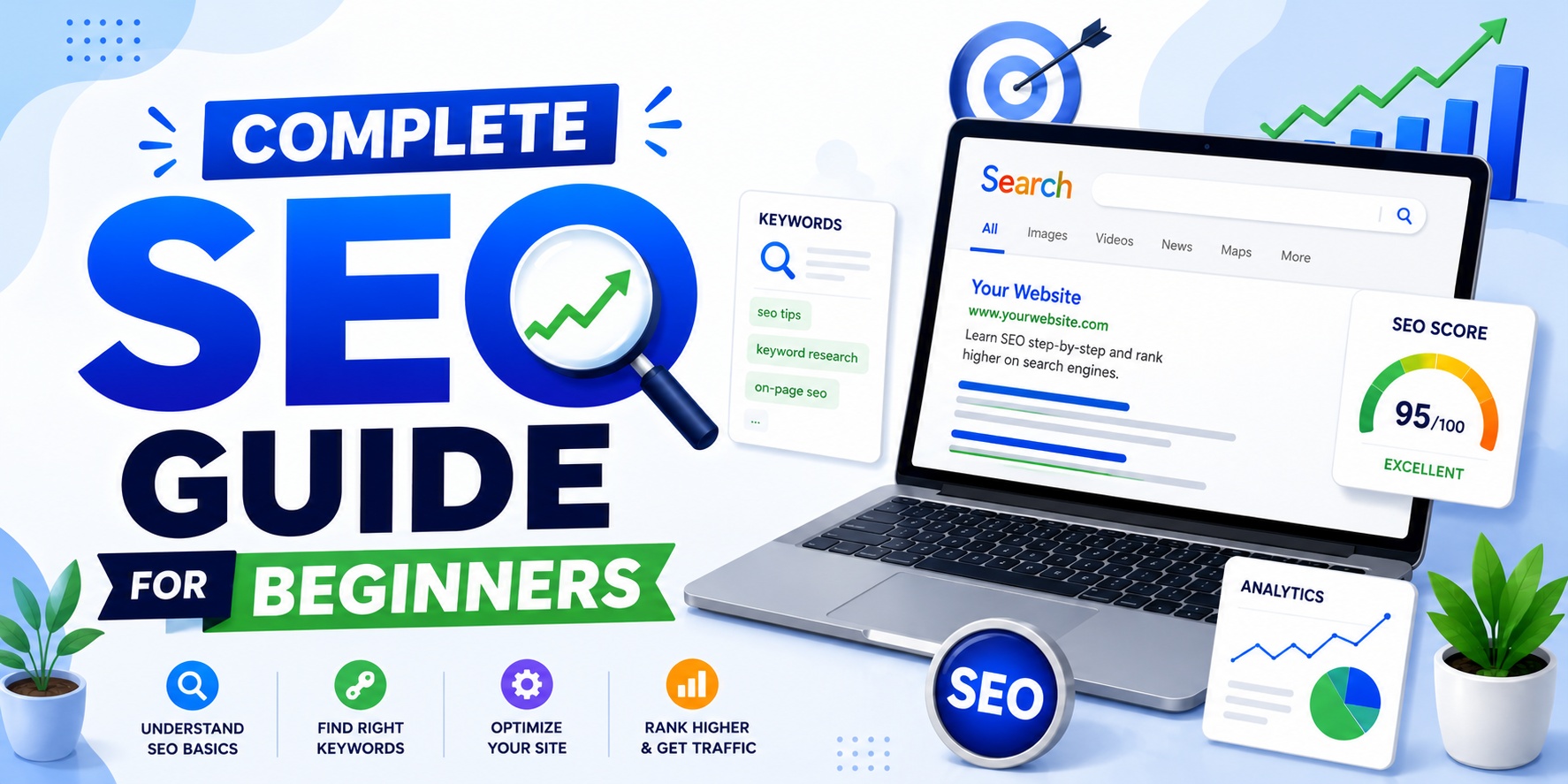
SEO is the process of improving your website so it appears higher in search engine results.
Example:
When you search “best mobile under 20000,” the websites that appear on top are optimized using SEO techniques.
Why SEO Matters:
- Increases organic (free) traffic
- Builds trust and credibility
- Improves user experience
- Helps grow your business online
How Search Engines Work
Search engines like Google follow three main steps:
1. Crawling
Bots scan your website pages.
2. Indexing
Your content is stored in a massive database.
3. Ranking
Pages are ranked based on relevance and quality.
Simple Analogy:
Think of Google as a librarian—it scans books (web pages), stores them, and recommends the best ones when someone asks a question.
Keyword Research (The Foundation of SEO)
Keywords are the words people type into search engines.
Example:
If you run a food blog, keywords could be:
- easy pasta recipe
- quick dinner ideas
Types of Keywords:
- Short-tail (e.g., SEO)
- Long-tail (e.g., SEO tips for beginners)
Tools You Can Use:
- Google Keyword Planner
- Ubersuggest
- Ahrefs
On-Page SEO (Optimizing Your Content)
On-page SEO focuses on optimizing elements on your website.
Key Elements:
- Title tag (your page title)
- Meta description
- Headings (H1, H2, H3)
- Keyword placement
- Internal linking
Example:
If your article is about “SEO tips,” include the keyword naturally in:
- Title
- First paragraph
- Headings
Technical SEO (Behind-the-Scenes Optimization)
Technical SEO ensures your website is easy for search engines to crawl and index.
Important Factors:
- Fast loading speed
- Mobile-friendly design
- Secure website (HTTPS)
- Clean URL structure
Example:
If your website takes too long to load, users will leave—and rankings will drop.
Off-Page SEO (Building Authority)
Off-page SEO focuses on activities outside your website.
Key Strategies:
- Backlinks (links from other websites)
- Social media sharing
- Guest posting
Example:
If a popular blog links to your article, search engines see your content as trustworthy.
Content is King
Good content is the heart of SEO.
What Makes Content Great:
- Helpful and informative
- Easy to read
- Well-structured
- Updated regularly
Example:
A detailed guide that solves a user’s problem will rank better than a short, vague article.
User Experience (UX) Matters
Search engines prioritize websites that offer a good user experience.
Key UX Factors:
- Easy navigation
- Clean design
- Readable fonts
- Low bounce rate
Example:
If visitors quickly leave your site, search engines assume your content isn’t helpful.
Common SEO Mistakes to Avoid
Avoid These Errors:
- Keyword stuffing
- Duplicate content
- Ignoring mobile users
- Slow website speed
Example:
Using the same keyword too many times can actually hurt your rankings.
Conclusion
SEO may seem complex at first, but once you understand the basics, it becomes much easier to apply.
Final Takeaways:
- Focus on quality content
- Use the right keywords
- Optimize both content and technical aspects
- Keep learning and updating your strategy
SEO is not a one-time task—it’s an ongoing process. With patience and consistency, you can improve your website’s visibility and grow your online presence.